
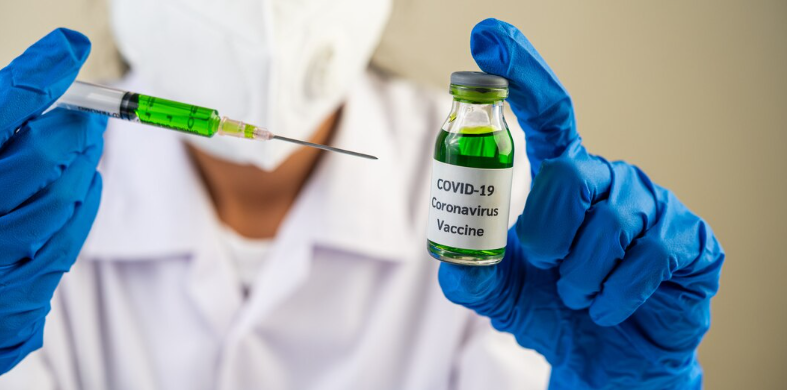
Within a Cambridge laboratory, fluorescent lights bounce off rows of glass vials as the machinery hums softly. The liquid in each vial is clear, unremarkable, and easy to miss. Nevertheless, researchers in rooms like this one secretly think that something in those droplets could eventually prevent not only COVID-19 but all coronaviruses that we might come into contact with for decades.
The hunt for a universal coronavirus vaccine is one of the most competitive scientific races taking place right now because of that possibility.
| Category | Information |
|---|---|
| Topic | Universal Coronavirus Vaccine Development |
| Main Goal | A vaccine that protects against all coronavirus variants and future strains |
| Key Research Focus | Targeting stable virus components like spike protein regions |
| Technology Platforms | mRNA vaccines, nanoparticle vaccines, DNA vaccines |
| Major Research Centers | Cambridge University, NIH, global biotech labs |
| Current Challenge | Rapid mutation of coronavirus variants |
| Scientific Motivation | Prevent future outbreaks such as SARS-CoV-3 |
| Reference Source | https://cepi.net/going-universal-search-all-one-coronavirus-vaccine |
The world has already witnessed the rapid emergence of vaccines when pressure becomes intolerable. Research labs worldwide started developing vaccines almost immediately after Chinese scientists released the virus’s genetic sequence in January 2020. Some groups completed models in a matter of hours. Clinical trials for experimental doses had already begun a few weeks later. The speed was almost unbelievable by historical standards.
Even though the first vaccine was introduced several years ago, there is still a persistent belief that humanity only prevailed in the first round.
The virus is constantly changing. Variants emerge, disappear, and then resurface in slightly different forms. How long will the current vaccines last? is the silent question that labs and health ministries ask with every new mutation. Scientists are now pursuing something much more ambitious because of this uncertainty.
Unlike SARS-CoV-2, a universal coronavirus vaccine would not specifically target any one virus. Rather, it would teach the immune system to identify structural traits that a whole coronavirus family shares. Theoretically, that could provide defense against existing strains, as well as viruses that haven’t infected people yet.
It is sometimes referred to by researchers as the “holy grail” of vaccine science. The phrase may sound dramatic, but the ambition is palpable as you walk through the research facilities where the work is being done.
Long stretches of genetic code illuminate computer screens in one lab. Similar to how military planners might examine fortress blueprints, scientists examine the molecular architecture of coronaviruses to look for vulnerabilities common to various viral strains.
The spike protein, one of the most promising targets, is located directly on the virus’s surface. Coronaviruses get their name from the spikes that resemble crowns and enable the virus to adhere to human cells. A similar mechanism is used by almost all coronaviruses. That resemblance could present an opportunity.
Antibodies may be able to stop a variety of coronaviruses before they even start infecting cells if a vaccine can teach the immune system to identify the stable portions of those spikes. In theory, it seems simple. In reality, things become more complex.
Viruses change over time. Occasionally, without warning. Rapid changes in specific spike protein components enable new variants to circumvent immune defenses established against previous strains. Booster shots became popular during the pandemic because of this evolutionary flexibility.
Developers of universal vaccines are attempting to concentrate on parts of the virus that undergo significantly fewer mutations. The virus cannot readily change those stable segments without weakening itself; they function similarly to structural bones. However, finding them requires a great deal of computational effort and numerous laboratory tests.
Teams are testing a number of strategies at research facilities in Australia, Europe, and the United States. Some are creating vaccines with nanoparticles that simultaneously display pieces of several coronavirus spikes. Others are utilizing cutting-edge mRNA technology in the hopes that the platform that assisted in the delivery of COVID vaccines can now be extended to provide more comprehensive protection.
It’s challenging enough to develop a vaccine that guards against a single virus. It’s a whole other story when it comes to protecting against a whole viral family. For decades, researchers have attempted similar approaches with varying degrees of success for HIV and influenza. The timeline is uncertain, even for optimistic researchers.
It may take years to complete clinical trials. Another level of complexity is added when new vaccines are manufactured globally. Furthermore, researchers are often taken by surprise when studying viruses.
The urgency is still present, though. In just over two decades, there have been three significant coronavirus outbreaks: COVID-19 in 2019, MERS in 2012, and SARS in 2002. Many epidemiologists believe that another one, sometimes jokingly referred to as SARS-CoV-3, will eventually appear.
It’s difficult to ignore the silent specter that that possibility casts over vaccine research. Sometimes the work feels more like preparation than regular research in labs where scientists compare viral genomes late into the night. It’s almost like pandemic insurance.
Ironically, a lot of this work is taking place while the public’s focus has shifted elsewhere. The streets are crowded once more. Airports are packed. The majority of masks have vanished.
However, scientists are still examining genetic sequences and virus models in labs all over the world in an effort to predict the next outbreak before it starts.
It’s still unclear if a universal coronavirus vaccine will be successful. The timelines are unpredictable and the biology is complex.
Nevertheless, there’s a subtle feeling that this could be one of the most important medical races of the decade as scientists work toward it, methodically comparing viral structures and honing vaccine blueprints. Because if they do it correctly, humanity may be ready for the next pandemic.