
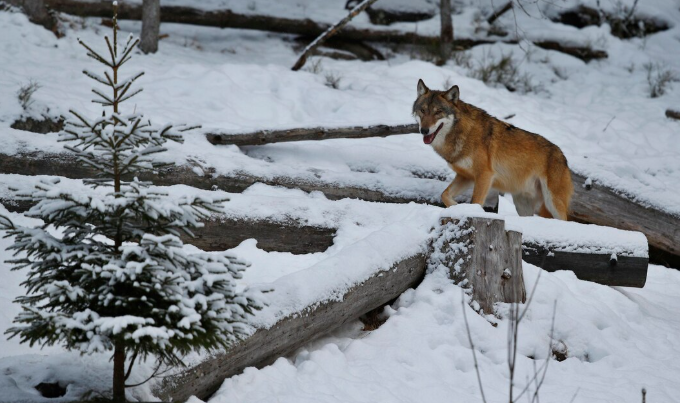
Programs for reintroducing wildlife are associated with a certain optimism, an almost idealistic conviction that nature will rebuild itself if you simply put the missing piece back. For the first time in almost eight decades, Colorado officials stood on a mountain ridge in the northwest of the state in the winter of 2023, unlatched a row of metal crates, and watched ten gray wolves cautiously enter public land. It was a true conservation milestone by all standards. Since then, a much messier situation has emerged.
Since that release in December, 25 wolves have moved to Colorado; more than half of them are now dead. Cars, coyote traps, mountain lions, other wolves, and in two distinct instances, government agents—one by Colorado’s own wildlife officials and the other by the USDA’s Wildlife Services division after the animal wandered into Wyoming, where shooting them is generally permitted—have all killed them.
Colorado Gray Wolf Reintroduction Program
| Species | Gray Wolf (Canis lupus) |
| Program Launch | December 2023 (first release) |
| Authorizing Mandate | Colorado Proposition 114 (2020 ballot measure) |
| Total Wolves Translocated | 25 (10 from Oregon in 2023; 15 from British Columbia in 2025) |
| Confirmed Deaths | 13+ (more than half of all translocated wolves) |
| Overseeing Agency | Colorado Parks and Wildlife (CPW) |
| Program Goal | 30–50 translocated wolves within 3–5 years; self-sustaining population |
| Release Location | Northwestern Colorado, public land |
| Program Director (outgoing) | Eric Odell, Wolf Conservation Program Manager (retiring June 2025) |
| Official Reference | Colorado Parks & Wildlife — Wolf Program |
Due to opposition from the federal government, which concluded that importing wolves from Canada might not be allowed under the rules governing the state’s program, a planned release for this past winter was quietly canceled. In recent months, two senior officials left the agency. Additionally, expenses have skyrocketed far beyond what the program’s designers anticipated, placing an already tight state budget in a more precarious position.
It’s important to consider the true implications of this, as the discourse surrounding it has become incredibly divisive. Ranchers and rural communities, who never supported wolves and have suffered the majority of the repercussions, contend that this is evidence that the program was flawed from the beginning. However, wildlife ecologists and conservationists maintain that the death toll is within the range of what any sincere scientist would have predicted, despite the fact that it is painful. Wolves naturally perish from disease, territorial disputes, and predators, according to Joanna Lambert, a wildlife ecologist at the University of Colorado Boulder. There was always going to be a steep survival curve for these animals.
The organization in charge of the program, Colorado Parks and Wildlife, said in a statement that the current mortality rates are “not surprising.” Depending on who is asking, some readers will find that description to be either infuriatingly detached or comfortingly scientific. CPW maintains that it is still looking into options for relocation for the upcoming winter. But it’s hard to ignore the math. After three years, a program that was supposed to place thirty to fifty animals on the ground within five years is only operating with a small portion of that number and lacks a clear pipeline for replacement wolves.
Since their release in Grand County in 2023, the Copper Creek pack has caused over a dozen livestock deaths and injuries. The fact that these wolves were known to attack cattle in Oregon before they were ever loaded onto a plane for Colorado makes this especially dangerous for ranchers. Instead of taking them out, CPW decided to move the pack. Regardless of whether that choice was the best one in terms of the environment, the agency has had difficulty healing politically. It is nearly impossible to restore trust through press releases once it has been lost between a wildlife agency and the communities it depends on.
In late March, Eric Odell, who worked for CPW for 26 years and developed into one of the organization’s most seasoned carnivore specialists, announced his retirement. His pre-wolf conservation efforts, such as protecting lesser prairie chickens and black-footed ferrets, seldom drew criticism. This chapter has been unique. His departure comes after that of director Jeff Davis, who quit late last year due to the unique misfortune of beginning work on the day Colorado’s wolf plan was officially approved. It’s difficult to determine whether these departures are the result of political pressure, burnout, or just the normal turnover of a challenging program. Most likely a few of the three.
Colorado is being compelled to navigate a larger narrative in real time. There is no significant disagreement with the ecological case for apex predators. Despite the complexity of the science surrounding how wolves altered the park’s food web, Yellowstone’s thirty-year experience has shown that large predators alter landscapes in ways that have an impact on a variety of species and habitats. However, Yellowstone is a national park, a regulated area that is mainly shielded from the conflict between property rights and ranching. Ranchland is the wolf country of Colorado. It’s a hunting area. It is both a county road and a state highway. The wolves are unaware of the distinction.
It’s not really whether wolves belong in Colorado. In 2020, the ballot measure was approved. The majority of voters continue to support the program, according to polls. The more difficult question is whether the infrastructure—finance, political will, replacement animal supply, and institutional knowledge within CPW—can withstand the present challenges long enough to provide the population with a true foothold. That is still genuinely unclear as of April 2026. The program seems to be at one of those turning points where choices made over the course of the next 12 months will decide whether Colorado has a functioning wolf population or serves as a warning.
In the meantime, it’s difficult to ignore the fact that the wolves themselves are acting like wolves. They are traveling, spreading, creating packs, giving birth to pups, and sometimes crossing state lines into unprotected areas. None of this was put to a vote.