
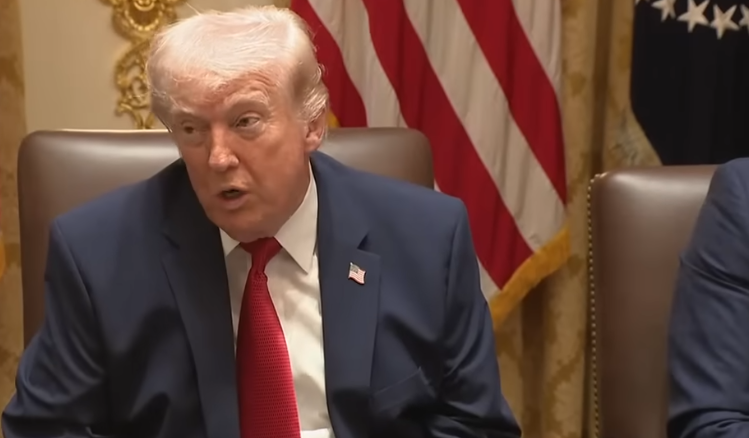
Speaking to a crowd of supporters on March 20th in the self-assured, carefree manner that has characterized his public persona over the course of two administrations, Donald Trump revealed that CNN had recently polled him at 100% approval.
The assertion was false in two ways at once: it was based on a poll conducted by NBC, which CNN reported, and it only included self-described MAGA Republicans, a group whose support for Trump is almost a given. It was the kind of statement that his detractors meticulously listed while his supporters laughed along with it. The real numbers, however, reveal a very different picture behind the bluster, and his party’s strategists are quietly worried about it.
| Category | Details |
|---|---|
| Subject | Donald J. Trump — 47th President of the United States (2nd Term) |
| Term Began | January 20, 2025 |
| Days in Office (as of March 30, 2026) | 434 days |
| Current Approval Rating | 36% (Reuters/Ipsos, March 24, 2026) — lowest of second term |
| Current Net Approval | -18 points (YouGov/The Economist, March 30, 2026) |
| Disapproval Rating | 56% |
| Economic Approval | 29% — lowest of either Trump term; lower than any Biden rating |
| Cost of Living Approval | 25% |
| Iran War Approval | 35% (down from 37%) |
| Average U.S. Gas Price | ~$4.00/gallon (surged since Feb. 28, 2026 Iran strikes) |
| Democrat Special Election Overperformance | +13 points vs. 2024 presidential results (The Downballot data) |
| Key Pollsters Tracking | Reuters/Ipsos, YouGov/The Economist, Gallup, CNN Poll of Polls |
| Official Reference | economist.com/trump-approval-tracker |
According to a Reuters/Ipsos poll conducted on March 24, 2026, Trump’s overall job approval rating was 36 percent, the lowest of his second term and a four-point decline from 40 percent just one week prior. His net approval, or the difference between those who approve and those who don’t, is negative 18 points, with 38% of respondents approving and 56% disapproving, according to a YouGov survey done for The Economist.
Every day, the tracker is updated. It has been weeks since the numbers started to improve. Observing this from the outside, a recurring pattern emerges: a president who took office with a particular economic pledge discovers that the economy is now clearly working against him.
Affordability was the promise. Almost all of Trump’s 2024 campaign platform focused on the claim that Biden’s prices were too high and that he would lower them. Voters were persuaded to put him back in office after witnessing years of rising grocery costs and doubling mortgage rates. Economic approval was 43% in the first few weeks of his second term, which is not great but manageable. It had fallen to 35% by June 2025. Since then, it has remained within that range, indicating that the issue was more structural than a one-time shock. Then the war with Iran started.
On February 28, 2026, the United States and Israel launched coordinated strikes against Iran. In just three weeks, the average price of gasoline increased to almost $4 per gallon, oil briefly reached $99 per barrel, and the yield on a 10-year Treasury bond increased from roughly 3.96 percent to 4.45 percent, all of which directly contributed to mortgage rates that surpassed 6.6 percent.
The cause-and-effect chain was quick and obvious. It was immediately felt by drivers filling up at gas stations in rural Pennsylvania or suburban Ohio. Those who had been anticipating a decrease in interest rates saw that prospect diminish once more. It turned out that the term “affordability,” which Trump had somewhat triumphantly declared obsolete on March 9th while speaking to Republican congressmen, was not obsolete at all. All it was doing was waiting for the next spike in prices to make an appearance.
The precise figures regarding economic stewardship are startling. The current percentage of Americans who approve of Trump’s economic management is just 29%, which is lower than any rating for either of his terms and lower than any rating for Joe Biden’s presidency. Merely 25% of respondents agree with his management of living expenses.
These are not numbers that allow for comfortable positioning for a president whose primary political identity has been shaped by the economy. According to The Economist’s tracker, his net approval rating on prices and inflation is currently negative 34 points and hasn’t changed much since October.
The demographic breakdown reveals a well-known but changing narrative. Men and white voters continue to be Trump’s most ardent supporters. Ethnic minorities and younger voters express strong disapproval. Postgraduates and college graduates are among the least supportive, a trend that has been consistent with Republican presidents in recent decades.
The performance of older voters is less anticipated. Pension-age voters, who have historically been a dependable Republican base, are surprisingly uninterested in the president. This raises concerns about whether economic concerns are affecting even traditionally devoted groups. Retirees on fixed incomes are directly and immediately impacted by the Iran War and its effects on oil prices.
Both parties are paying attention to the implications for the midterm. In contested special elections throughout 2025, Democrats have outperformed their 2024 presidential vote share by an average of 13 percentage points, according to data from The Downballot.
A year before an election cycle, congressional strategists take that kind of persistent overperformance across several districts and states seriously. In districts where Trump narrowly prevailed in 2024, Republicans holding competitive seats are examining state-by-state approval forecasts and doing unsettling math. Whether the Iranian conflict stabilizes in a way that eventually lowers gas prices and allows the economy to improve is still up in the air. However, with 434 days into a second term and a 36 percent approval rate, the gap between the polls and the promise has never been so apparent.