
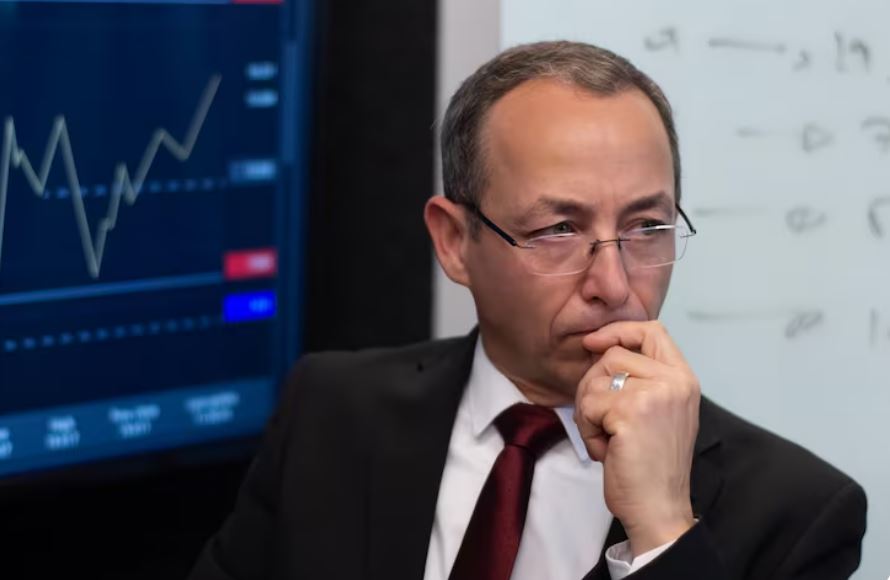
People who have spent too many afternoons in congressional hearing rooms attempting to explain something complex to people who would prefer to talk about something else experience a certain kind of exhaustion. Although Michael Bright, the CEO of the Structured Finance Association, doesn’t mention it much, it exists. His deliberate word choice on podcasts, the brief pause before responding to a reporter’s inquiry about Fannie Mae or Freddie Mac, and the patience that, if you listen closely, sounds like restraint are all examples of it.
Bright has been making the rounds once more, and the same issue keeps coming up. He thinks that lawmakers still don’t fully understand what government-sponsored businesses actually do. Not their politics. Not the visuals. The mechanics. The American housing market’s underfloor pipes. He claims that even though conservatorship has been in place for more than 15 years, Congress still refers to the GSEs in the same manner as someone who has never looked inside a car.
| Profile | Details |
|---|---|
| Name | Michael Bright |
| Current Role | CEO, Structured Finance Association (SFA) |
| Previous Role | Chief Operating Officer, Ginnie Mae |
| Organization | Structured Finance Association — Washington, D.C. |
| Industry Focus | Securitization, mortgage-backed securities, GSE policy |
| Recent Testimony | House Financial Services Committee, February 11, 2026 |
| Notable Topics | GSE conservatorship, Basel III, Reg AB II modernization |
| Public Platform | Bright Ideas Podcast, CNBC Fast Money appearances |
| Policy Affiliation | Engages with Congressional financial committees and FHFA |
| Market Coverage | Banks, mortgage servicers, securitization firms |
Recently, the mortgage market has been erratic. The cost of home loans has increased for the past five weeks in a row, and the conflict in Iran has created a tension in the financial system that is felt by all but is difficult to identify. In light of this, Bright’s annoyance assumes a different significance. According to his reading, those making the next round of GSE decisions—privatization, recapitalization, the awkward dance with an explicit federal guarantee—may be operating under antiquated presumptions.
He doesn’t state this directly. For that, he’s too Washington. However, the message is evident in his most recent appearances. When he and seasoned MBS investor Ron Sion discussed what actually influences mortgage rates on the Bright Ideas podcast in April, the discussion kept veering toward a quiet point: the majority of public discourse reverses the causality. Congress does not cause rates to fluctuate. Bond markets, capital regulations, investor demand, and the incredibly unappealing plumbing of securitization are the reasons behind their movement.

The disconnect has an almost generational quality. Today’s GSE policy is being shaped by legislators using mental models created during the 2008 crisis, when the problems were clear and the answers seemed urgent. Bright sees a more nuanced picture because she grew up through Ginnie Mae and observed the post-crisis reconstruction from the inside. He is concerned about how Basel III will affect bank balance sheets later on. Without a clear guarantee, which only Congress can provide, he is concerned about whether the market would even accept GSE securities. He worries about being misinterpreted on a large scale in a way that feels intimate.
It’s difficult to ignore the subtle irony as you watch this unfold. The industry needed a translator, which is one of the reasons Bright runs this association. And here he is, still translating after over ten years. Eventually, the Administration hopes to remove the GSEs from conservatorship. Pulte’s FHFA has been doing housework. This time, Calabria is back at OMB. The parts are moving. For the time being, Bright continues to appear to address the question of whether anyone on the Hill truly comprehends what’s going on.