
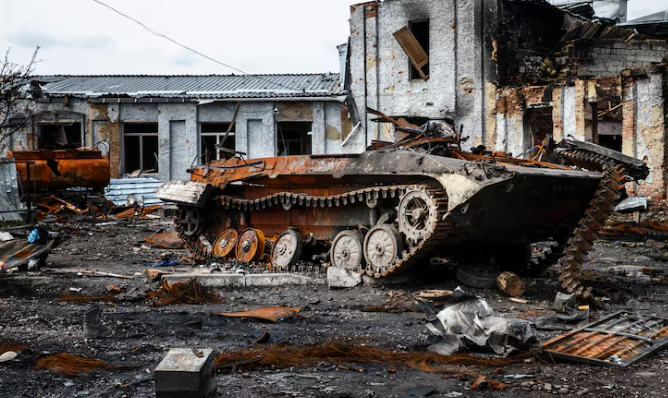
The nights in Tehran have begun to sound different. Punctuated, but never quiet. The low rumble that seems to linger a moment too long, like an echo that won’t go away, the distant thud of airstrikes. In one neighborhood, a pharmacy sign flickers above a shattered storefront, glass crunching underfoot as neighbors gather, not speaking much.
When war transcends the news, it becomes more intimate and smaller. After several weeks, the 2026 Iran War has developed an odd cadence. Retaliation, airstrikes, declarations, and denials.
| Category | Details |
|---|---|
| Conflict | 2026 Iran War |
| Start Date | February 28, 2026 |
| Main Parties | Iran vs United States & Israel |
| Key Developments | Airstrikes, missile attacks, rising oil prices |
| Affected Regions | Iran, Israel, Gulf states |
| Civilian Impact | Increasing casualties, infrastructure damage |
| Global Impact | Oil > $100/barrel, market volatility |
| Diplomatic Status | Conflicting claims, “fluid” negotiations |
| Military Activity | Thousands of strikes and missile exchanges |
| Reference | https://www.bbc.com |
Then do it again. When Israel and the United States launched coordinated attacks on Iranian targets on February 28, the conflict officially started. Since then, Israel and neighboring Gulf states have been hit by waves of missile launches and thousands of strikes. Even those in charge of this conflict may not fully comprehend its scope.
Both sides seem to be working within a carefully controlled escalation, moving forward but avoiding something even more significant. U.S. officials talk about accuracy. Iranian leaders discuss taking revenge. Every assertion seems purposeful, almost scripted. However, the results are still uncertain.
The evening air in Tel Aviv was pierced by sirens. Automobiles move slowly. People go outside and look up, searching for light streaks in the sky. In those situations, there is a tension that is almost tangible. Not quite panic. But consciousness. a continuous adjustment of risk.
In response to the still-unverified possibility that Iran might disrupt the Strait of Hormuz, oil prices have risen above $100 per barrel once more. Often discussed in abstract terms, that narrow stretch of water suddenly seems very real. More than just oil is transported by tankers passing through it. The delicate equilibrium of international markets is carried by them. Investors appear to think that even a small disruption could quickly spread, impacting everything from shipping prices to inflation rates in nations that are far from the conflict.
Nevertheless, the markets have not crashed. Not just yet. The story gets complicated at that point.
There are still hints that diplomacy may be feasible despite the violence, but they are weak and erratic. Talks are “fluid,” according to U.S. officials. At least in public, Iran disputes the existence of any talks. That paradox is instructive. It implies that communication may be occurring indirectly, via middlemen, or not at all. It’s still unclear if these signals are an attempt to buy time or a sign of real progress. Both options are available in history.
Diplomacy frequently arrived late in earlier Middle Eastern conflicts, shaped more by weariness than consensus. Something similar might occur here, but only after the expense is indisputable. Both parties seem willing to go on for the time being. Civilians are still feeling the effects in the interim.
According to a widely circulated story, a young woman in Tehran was killed while working in a pharmacy when a nearby building was hit. In another, an airstrike’s debris killed a 26-year-old blogger who had just returned home. The course of the war is not altered by these tales. However, they change its weight. They serve as a reminder that suffering and strategy seldom coincide.
As this develops, it’s difficult to avoid the impression that contemporary warfare has become more accurate and detached. Satellite targeting, guided missiles, and drones are all intended to lessen uncertainty. However, the human result still appears uncannily familiar. The question of how far this spreads is another.
Attacks by missiles and drones have already affected areas of the Gulf in addition to Iran and Israel. It feels like a big expansion. It raises the hypothetical possibility that the conflict might become more regional in scope. or even worldwide, if powerful nations get more actively involved.
However, despite its thinness, restraint has held up so far. The oil crisis of the 1970s is the analogy that is subtly brought up in discussions. The stakes feel similar, not because the circumstances are the same. Domestic politics, geopolitical alliances, and energy markets are all intricately linked. The current disruption may be comparable to previous shocks, according to the International Energy Agency. That’s a daring claim. And one that has repercussions off the battlefield.
After every attack, the smoke eventually clears in Tehran. Returning to the streets, people cautiously avoid debris and check their phones for potentially inaccurate updates. Life resumes, albeit in bits and pieces. It always does.
However, there is still some uncertainty. It’s not just about how this war ends; it’s also about what it becomes along the way.
Because disputes of this nature seldom remain contained. They change. They alter presumptions. Once-steady lines are redrawn. Additionally, they occasionally leave behind a world that appears familiar but acts differently.
As of right now, the Iran War is still in that precarious area between escalation and moderation. Furthermore, it’s unclear exactly which way it will go next.