
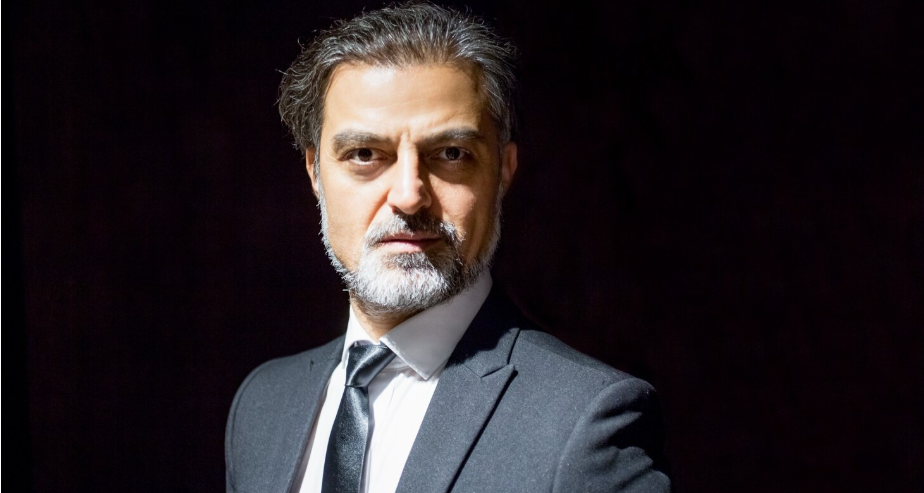
The hearing room inside the Senate Armed Services Subcommittee is usually a controlled environment. Rows of microphones. Under bright lights, water pitchers quietly perspire. Staff whispers along the back wall as senators move papers. According to the man at the center of the situation, that serene routine literally broke on March 4, 2026. Brian McGinnis was that man.
About thirty minutes into the hearing, he got up to interrupt testimony regarding military readiness. The words came out sharply and quickly. McGinnis, a former Marine seeking a seat in the U.S. Senate from North Carolina, started yelling against American engagement in Middle Eastern conflicts. The statement, “No one wants to fight for Israel,” rang out in the room and on social media afterwards.
| Field | Details |
|---|---|
| Full Name | Brian McGinnis |
| Age | 44 |
| Profession | Former U.S. Marine, Political Candidate |
| Military Service | United States Marine Corps (2000–2004) |
| Political Affiliation | Green Party |
| Senate Race | Candidate for U.S. Senate, North Carolina |
| Known For | Anti-war activism and Capitol Hill protest |
| Major Incident | Protest at Senate Armed Services Subcommittee hearing (March 4, 2026) |
| Injury | Reported broken arm during removal by Capitol Police |
| Reference | https://www.cbsnews.com |
As I watch the video now, I notice an odd combination of chaos and choreography. Capitol Police rush in his direction. Chairs scuff. As though they’re waiting for the disturbance to end, a few senators look down at their notes. Tim Sheehy, who allegedly assisted officers in escorting McGinnis to the door, then appears on the scene. Argument, interpretation, and likely a good deal of quiet debate in the Capitol hallways surround what transpired next.
McGinnis resisted being removed. You can see that much on camera. His arm got stuck between the door and its frame somewhere during that little struggle by the doorway. Microphones picked up an audible crack that reverberated throughout newscasts, indicating that something had gone horribly wrong.
He “got his own arm stuck in the door,” according to the authorities. According to McGinnis, it broke during the forcible removal.
The precise course of the injury is still unknown. However, the image is hard to ignore: a Senate candidate shouting anti-war slogans while being lifted and carried out of a hearing room while donning what looks to be a Marine-style uniform. The symbolism is nearly too clear.
From 2000 to 2004, when American military operations overseas were growing quickly following the September 11 attacks, McGinnis was a member of the U.S. Marine Corps. Many veterans’ opinions on foreign policy were influenced by those years. Some came out strongly in favor of the intervention. Others left with doubts about the real results of protracted conflicts. McGinnis appears to fall firmly into the second category.
His anti-war rhetoric has been a major component of his Green Party-sponsored Senate campaign. He frequently discusses veterans, the expenses of wars abroad, and the perception that Washington continues to veer toward new conflicts without unambiguous public support.
He appeared to be pushing that argument into a space where it is rarely heard as he stood in that hearing room, yelling as senators talked about military readiness. Depending on who you ask, that may or may not have been brave.
Following the incident, McGinnis was taken into custody by Capitol Police. He is accused of assaulting an officer, resisting arrest, and unlawfully demonstrating, according to official statements. There are still legal proceedings going on, and it seems possible that the case will shadow his Senate campaign for months to come.
That brings up a question that political capital investors, such as volunteers, campaign donors, and party strategists, are undoubtedly silently considering: does a viral protest help or hurt a campaign?
Supporters seem enthusiastic. Videos of the incident spread rapidly online, particularly among anti-war activists who argue that the confrontation exposed the limits of protest inside federal institutions. As the video goes viral, it appears that many people see the incident more as a symbolic confrontation than a security incident. Critics perceive things differently.
Some senators and pundits contend that McGinnis purposefully incited conflict in order to garner attention. Later, Tim Sheehy implied as much, claiming that the protester seemed to be looking for conflict and that he intervened to assist officers in handling the situation. The truth may lie in the middle of those interpretations.
Rarely do protests inside government buildings go smoothly. They can be theatrical at times, messy, and emotional. McGinnis was probably aware that there would be repercussions for interfering with a Senate hearing. It’s a different story entirely whether he anticipated a broken arm and the ensuing national spotlight.
Since the incident, his campaign has said he is recovering and undergoing rehabilitation. For someone attempting to gain recognition in a statewide race, the injury necessitates time away from public appearances. Nevertheless, he maintains that the campaign goes on.
Watching this story unfold, it’s hard not to notice how modern politics seems to reward moments like this—dramatic, confrontational, captured perfectly on video. An obscure Senate candidate can become the subject of a national headline with just one disturbance in a quiet committee room. It’s another matter entirely whether or not that attention results in votes.
It seems possible that McGinnis knew exactly what he was doing when he stood in that doorway and the police pulled him away. Or maybe, as a Marine veteran watching another military debate, he just decided he had heard enough and reacted in the heat of the moment.
In any case, the scene—the raised voice, the struggle by the door, the sharp cracking sound that altered the tone of the entire story—is now permanently available online.