
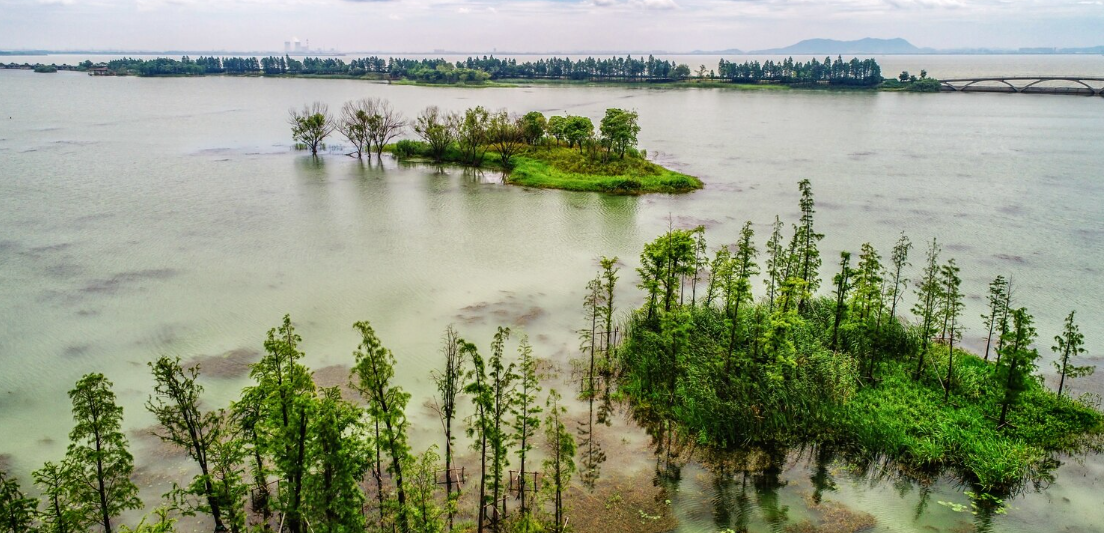
Standing close to the muddy shoreline of the Pichavaram mangrove forest in southern India in the early morning, the scene seems oddly serene. Fishermen maneuver small boats through seemingly accidental channels, crabs dart between shadows, and the tide moves slowly through tangled roots. This hardly appears to be a defensive structure at first glance. However, a number of coastal scientists secretly think that these forests are accomplishing something amazing: reducing the ocean’s ferocity before it reaches populated areas.
Despite the fact that nothing about mangroves is engineered, their operation feels almost mechanical. Their roots slow water and trap sediment by rising above the mud like knotted scaffolding. Waves encounter a tangle of trunks, branches, and leaves as they push inland. Energy evaporates. Wave heights decrease. On paper, the effect might seem insignificant, but on the ground, even a slight drop in water level can mean the difference between dry streets and flooded homes.
| Category | Information |
|---|---|
| Ecosystem | Mangrove Forests |
| Found In | 128 countries across tropical and subtropical coastlines |
| Global Coverage | Nearly 15% of the world’s coastlines |
| Regional Concentration | Over 30% located in Southeast Asia |
| Tsunami Protection | Mangrove belts several hundred meters wide can reduce tsunami height by 5–30% |
| Wave Reduction | 100 meters of mangroves can reduce wave height by 13–66% |
| Flood Protection Value | Estimated $65 billion per year globally |
| Carbon Storage | Over 6.4 billion tons of carbon stored in mangrove ecosystems |
| Threat Level | Nearly 50% of mangroves lost globally in the last 50 years |
| Reference | https://www.nature.org |
The 2004 Indian Ocean tsunami is a persistent memory that permeates much of Asia and sustains this discussion. In a matter of minutes, entire towns in Thailand, Sri Lanka, and Indonesia were destroyed. Over 230,000 people lost their lives. However, a curious observation was later made by researchers. In some cases, villages behind intact mangrove forests experienced notably less damage. Naturally, the water still came, but it seemed to have less force now, as though it had passed through a filter of branches and roots before coming to land.
The figures are currently being discussed in policy circles. Several hundred-meter-wide mangrove belts can lower tsunami heights by about five to thirty percent. To someone who imagines enormous waves, that may seem unimpressive, but coastal planners appear to recognize the importance. A wave that comes in a little lower and moves more slowly spreads farther inland, trapping less debris and flooding fewer homes.
Interestingly, one of the less obvious benefits of mangrove forests is debris. Floating debris, such as cars, boats, and wood, can turn into lethal projectiles during storms or tsunamis. These items are frequently trapped by mangrove roots. It’s difficult to ignore how tangled forests occasionally capture the chaos before it spreads farther inland when viewing photos taken from storm-damaged coastlines.
Mangroves are not, however, magical walls. They can be overwhelmed by large tsunamis. Trees can be completely uprooted or their branches broken by waves exceeding four meters in height. Additionally, the water just flows over the canopy if the tsunami is tall enough. Engineers are quick to point this out, maybe because they don’t want to romanticize nature too much. The same restriction, however, also holds true for many concrete barriers, which are rarely constructed high enough to block extremely strong waves.
The way mangroves coexist with other coastal features is what makes them fascinating. At various phases of a storm surge, energy is absorbed by dunes, seagrass beds, coral reefs, and offshore sandbanks. These ecosystems work similarly to layered defenses when they are intact. One gets the impression from looking at satellite photos of these coastlines that nature created a complex defense system long before people attempted to imitate it.
However, the protection is only effective if the forests continue to be dense and expansive. Not much is accomplished by a thin strip of mangroves, which are frequently found close to resort developments. The effectiveness of mature forests, which span thousands of meters, is significantly higher. The surge is slowed by tall trees. Wave energy is broken by thick canopies. Even the uneven forest floor plays a part by obstructing the water’s flow.
At this point, the narrative becomes a little unsettling. Over the past 50 years, more than half of the mangroves on Earth have vanished. Shrimp farms are frequently to blame in Southeast Asia. To create artificial ponds for aquaculture, vast tracts of coastline are cleared. The company may turn a profit for a few years. After that, the soil deteriorates and the land becomes barren, unusable for farming or forestation.
An impressive example is provided by Indonesia. Although the nation is home to over 20% of the world’s mangroves, vast tracts of land have been cleared for coastal development and palm oil plantations. As environmental scientists observe the rate of change, they are quietly concerned that natural coastal defenses are being destroyed more quickly than they can be rebuilt.
However, there are restoration initiatives, which can occasionally feel surprisingly optimistic. The Green Coast project assisted local communities in Indonesia in replanting approximately 2,000 hectares of mangroves following the 2004 tsunami. The initiative supported small fisheries and crab farming while focusing on forest restoration rather than erecting concrete walls to replace villages. Despite appearing haphazard on maps, the resulting terrain—patches of mangroves combined with aquaculture and agriculture—seems to form a resilient coastline.
Carbon is another dimension that has begun to garner interest. Mangroves are remarkably effective at sequestering carbon dioxide and trapping it in wet soils, where it drastically slows down decomposition. According to some estimates, these forests store more than 6.4 billion tons of carbon. Thus, mangrove preservation may contribute to climate stability while also shielding coastlines from storms.
It’s hard not to be silently respectful of these forests when you’re close by because of how much work they do without anyone noticing. The shoreline is gripped by the roots. The wind is slowed by the canopy. Over time, the coast becomes thicker as sediment gradually accumulates beneath the trees. This doesn’t appear to be very dramatic. No tall walls, no steel barriers. Only twisted branches pointing out to sea.
It’s unclear if governments will save enough mangroves to make a difference. Development pressures seldom go away, and coastal land is valuable. However, there is a growing awareness that these forests may be the least expensive disaster defense ever disregarded, particularly among Asian urban planners. It is also difficult to envision destroying mangrove forests once you witness how waves vanish within them.