
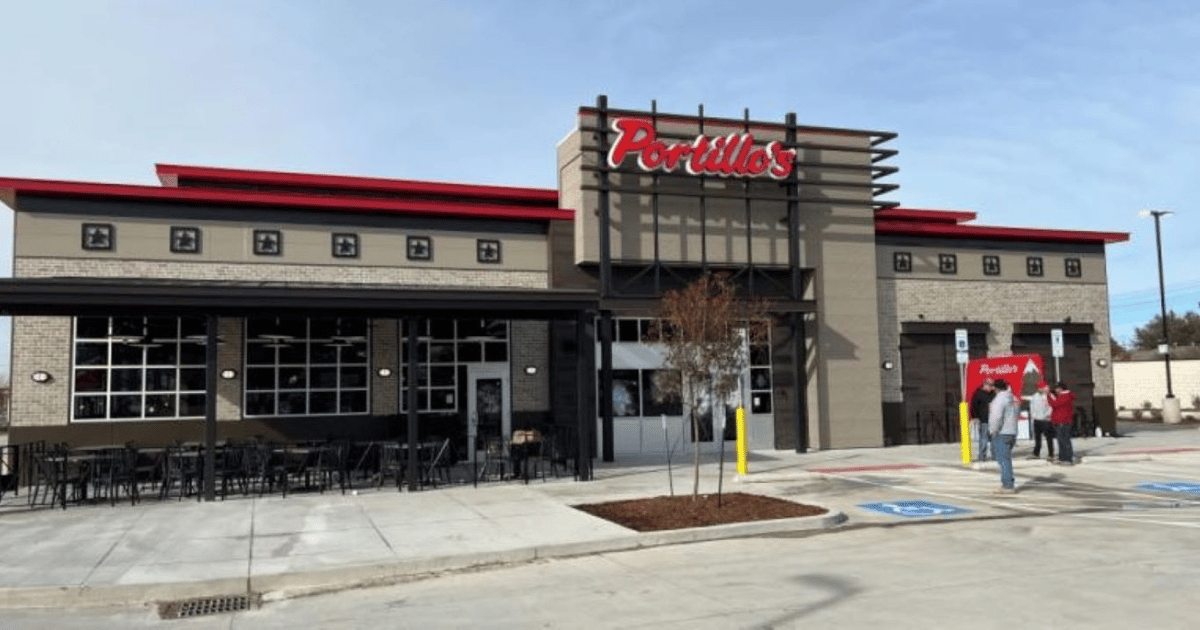
Portillo’s Inc. reported a 3.3% decline in same-store sales for the fourth quarter ended December 28, 2025, as the Chicago-based fast-casual chain continues to address challenges stemming from rapid expansion, particularly in the Texas market. The company announced it is implementing a strategic reset to focus on strengthening unit economics and improving brand awareness in newer regions.
According to interim CEO and chairman Mike Miles, Portillo’s has paused development momentum to avoid further cannibalization and concentrate on improving performance at existing locations. Incoming CEO Brett Patterson, who was appointed earlier this month and begins his role this week, will lead the company through this strategic shift.
Texas Market Struggles Drive Strategic Shift
During Tuesday’s earnings call, Miles emphasized that building sales remains the primary objective for improving the Texas market’s performance. He noted that Portillo’s operates restaurants in Chicago generating $4-5 million in average unit volumes, a benchmark the company aims to replicate in Texas. However, newer regions continue to grapple with significantly lower AUVs compared to the brand’s established markets.
Miles acknowledged that better communicating the Portillo’s brand value proposition to unfamiliar consumers represents a critical challenge. The company’s rapid expansion into new territories appears to have outpaced its ability to build sufficient brand awareness and customer loyalty.
Measured Development Approach for 2026
Portillo’s plans to open just eight new restaurants in 2026, reflecting a more cautious growth strategy. The company recently opened a location in Kennesaw, Georgia, built with a new smaller prototype that achieved nearly $4 million in sales during its first 100 days. Despite this encouraging performance, the executive team confirmed that the next Portillo’s in the Atlanta area won’t open until 2027.
Additionally, the company ended the fourth quarter with 102 total restaurants after opening four new locations during the period. This measured expansion represents a significant slowdown compared to previous development plans.
Financial Performance and Recovery Initiatives
For the fourth quarter, Portillo’s revenues increased just 0.6% to $1.1 million, primarily attributed to new store growth rather than same-store sales improvements. Meanwhile, the company swung to a loss of $6.3 million, representing a $6.2 million decrease from the same quarter the previous year.
CFO Michelle Hook stated that 2026 efforts will focus on executing strategies to strengthen transaction growth while optimizing returns on new restaurants. The company plans to leverage its Portillo’s Perks loyalty program, which has attracted two million members approximately one year after launch, along with other marketing initiatives to drive trial and frequency.
Operational Improvements and Marketing Levers
To improve same-store sales in challenged markets, Portillo’s is investing in labor management and implementing short-term marketing tactics including bundled meal deals. Hook emphasized that the company will prioritize operational excellence and invest in team members as part of the turnaround strategy.
The success of the loyalty program provides a foundation for building customer engagement, particularly in markets where brand familiarity remains low. However, translating loyalty membership into sustained sales growth remains a key objective for the incoming leadership team.
As Patterson assumes his new role, the restaurant industry will be watching closely to see how Portillo’s balances its growth ambitions with the need to strengthen performance in existing markets. The timeline for achieving meaningful improvement in Texas and other newer regions remains uncertain, though company leadership has signaled a commitment to patient, measured expansion going forward.