
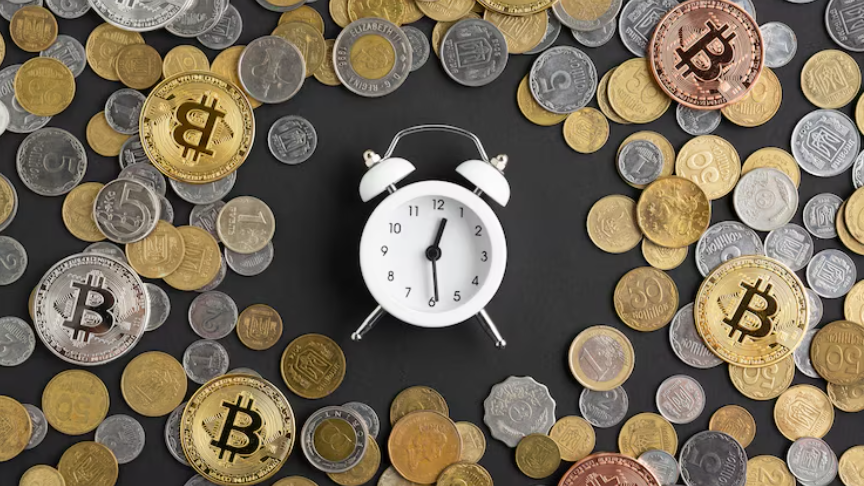
For the past two years, a certain type of investor has watched Bitcoin rise, fall, and then rise again from across the room with their arms folded. Despite all the drama surrounding the asset, they have never made any money from it. No discount. Not a dividend.
The mailbox is empty. Only the cost and the prospect of higher costs. That lack of cash flow has always felt like a silent disqualification to those who grew up on utility stocks and bond ladders. It appears that BlackRock has taken notice.
| Field | Details |
|---|---|
| Company | BlackRock, Inc. |
| Headquarters | New York City, New York, USA |
| Founded | 1988 |
| CEO | Larry Fink |
| Assets Under Management | Approximately $11.5 trillion (as of late 2025) |
| Filing Type | Bitcoin Premium Income ETF (covered call strategy) |
| Regulator | U.S. Securities and Exchange Commission |
| Earlier Bitcoin Product | iShares Bitcoin Trust (IBIT), launched January 2024 |
| Underlying Asset | Bitcoin, market cap ~$1.5 trillion |
| Income Mechanism | Selling call options against spot Bitcoin holdings |
| Target Investor | Income-focused investors seeking crypto exposure |
The company recently submitted an application to the SEC for a Bitcoin Premium Income ETF, a product that combines spot Bitcoin exposure with a covered call strategy. Anyone who has ever sold calls on Apple or Coca-Cola is familiar with the mechanics, but the underlying asset alters the overall feel of the transaction. By taking advantage of the asset’s well-known high implied volatility, selling calls against Bitcoin transforms it from a liability into a profit. Options desks believe that this is the kind of product that the market has been silently waiting for, and it’s an odd inversion.
The timing is not coincidental. The old dependables, such as Treasury bills, CDs, and investment-grade bonds, no longer have the same gravitational pull as they did when the yield curve was screaming, and interest rates have significantly decreased through 2026.
Money has shifted into utilities, energy companies, REITs, and anything else that generates cash, sometimes in an awkward way. The mood, according to the fixed income desks I’ve spoken to over the past year, is somewhere between curiosity and resignation. Yield is not being abandoned by investors. They are searching unfamiliar locations for it.
For its part, cryptocurrency has always struggled with yield. Yes, staking is possible, but it is limited to proof-of-stake networks, and Bitcoin is not one of them. With a market capitalization of about $1.5 trillion, the biggest cryptocurrency does not generate any revenue on its own. It doesn’t compound; it just sits there like gold in a vault. The access issue was resolved when spot Bitcoin ETFs were approved in 2024, allowing anyone with a brokerage account to own Bitcoin without having to understand what a cold wallet was. However, the income issue remained unresolved. BlackRock’s latest filing is an effort to address that issue as well.
It’s another matter entirely if it works. The reputation of covered call funds on stocks is not entirely positive. Yes, they make money, but they also cap upside, so holders frequently find themselves watching the parade from the sidelines in a year when the underlying rips higher. Out of all the assets, Bitcoin is the most vulnerable. Investors who pile in for the yield run a serious risk of missing the very rallies that initially made Bitcoin intriguing. Whether the math will favor participation or patience is still up in the air.
As this develops, it’s difficult to ignore how rapidly the line separating traditional finance from cryptocurrency has blurred. Ten years ago, it would have been considered satire if BlackRock had applied for a Bitcoin income product. It’s Wednesday now. In some way, the covered call—that modest, antiquated tactic your grandfather may have employed on his IBM stock—has evolved into a conduit between two previously incompatible worlds. The filing is not yet complete. It has not yet received approval from the SEC. However, it appears that the direction of travel is fairly obvious.