
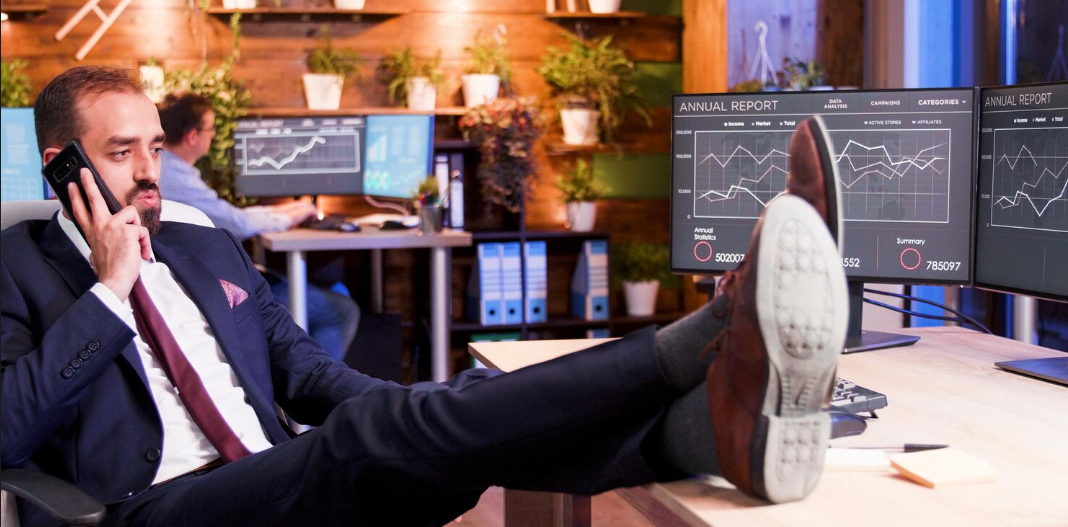
The quietness of a day trader’s apartment is the first thing you notice. It’s not exactly the lack of sound, but rather a certain silence that permeates the space between price ticks on the desk. Three glowing monitors. A partially consumed cup of coffee. The soft hum of a CPU fan that is overworking itself. A candle forms, breaks, and reverses somewhere on the screen. Before lunch, the viewer had already experienced three minor heart attacks.
Speaking with traders these days gives me the impression that something has changed. They are no longer trading in the exact market for which they signed up. The majority of daily volume in U.S. stocks is now accounted for by algorithms, and the speed at which orders move has reduced the human reaction window to an almost cruel level. A retail trader observes the formation of a setup. The move has already ended by the time the finger moves. It’s difficult to ignore how frequently these traders refer to the encounter as “fighting ghosts.”
| Subject Profile: The Modern Retail Day Trader | Details |
|---|---|
| Typical Profile | Retail trader, age 22–45, often self-taught |
| Primary Markets | Crypto, equities, forex, options |
| Average Daily Screen Time | 9–14 hours during active sessions |
| Tools Used | TradingView, MetaTrader, Bloomberg Terminal, Discord rooms |
| Common Mental Health Issues | Anxiety, insomnia, burnout, compulsive behavior |
| Reported Trader Loss Rate | Roughly 70–90% lose money in their first year |
| Dominant Market Forces | High-frequency trading, AI execution, dark pools |
| Decision-Making Pressure | Sub-second windows during volatility spikes |
| Notable Industry Resource | National Alliance on Mental Illness |
| Behavioral Triggers | FOMO, revenge trading, overconfidence cycles |
| Emerging Trend | Therapists specializing in trader psychology |
In the past, volatility was a phenomenon. It feels engineered, manufactured, and nearly weaponized now. In particular, cryptocurrency markets have turned into testing grounds for cascading liquidations that quickly eliminate leveraged positions. While drinking water, traders watch as their accounts are cut in half. The feeling that the numbers don’t belong to them has been described by some as dissociative. Some simply refer to it as grief.
Anecdotally, the pattern is consistent, but the psychological literature is still catching up. Sleep comes first. Next, hunger. Next, relationships. I once had a casual conversation with a trader who told me that his wife had learned to identify the specific sound of a margin call notification, so when his phone buzzed, she began to leave the room. When he said that, he laughed. It was not a genuine chuckle.

The asymmetry of the battle, rather than the volatility itself, which has always existed, is what distinguishes this generation of traders. Models used by quant funds take in news in microseconds. Caffeine and rumors on Discord power retail traders. The damage usually resides in the space between those two realities. In theory, studies that show disciplined emotional control can increase profitability by about 30% are encouraging, but in reality, discipline is more difficult to muster when your screen is bleeding red and a stranger on social media is posting a Lamborghini.
Some traders adjust. Regardless of what’s going on, they walk away from the desk at 11 a.m., journal, meditate, and set strict daily loss limits. A tiny but increasing number of people are beginning to see therapists who focus on financial-market stress, a specialty that was hardly present ten years ago. Observing this develop gives me the impression that the industry is gradually realizing the issue it has been denying.
The dream continues, though. The flawless entrance, the spotless setup, the successful morning. People’s reasons for staying are simple to comprehend. Despite their brutality, markets provide a unique opportunity for intelligence and hard work to be momentarily apparent. Most traders don’t ask themselves directly whether that’s sufficient to justify the toll. They will take care of it. Just not prior to the start of the subsequent session.