
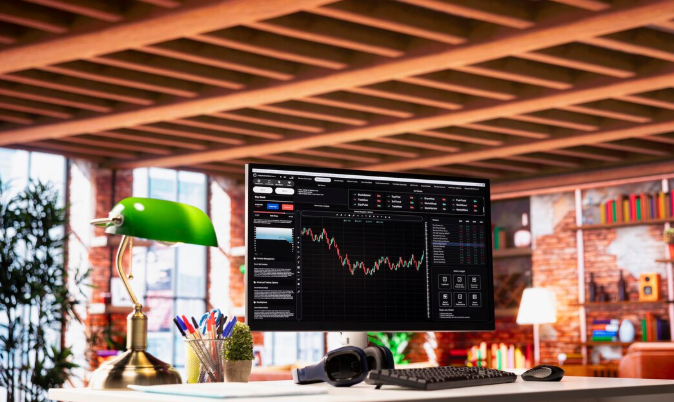
The first thing that stands out about HGRAF stock is how it moved silently for years before abruptly showing up on traders’ screens. Financial headlines don’t typically feature the name of HydroGraph Clean Power, a Canadian materials company focused on graphene technology. However, the stock recently experienced a significant increase, rising by almost 19% in a single day to about $8.25. As the chart developed, it seemed more like an unexpected discovery than a gradual investment narrative.
For a very long time, graphene has had an almost legendary reputation. For over ten years, scientists have been discussing a material that is stronger than steel, lighter than aluminum, and has the potential to revolutionize electronics, batteries, and even medical technology. The promise was always apparent in labs. It has been more difficult to turn that promise into a successful business, though.
| Category | Details |
|---|---|
| Company | HydroGraph Clean Power Inc. |
| Stock Ticker | OTCMKTS: HGRAF |
| Headquarters | Vancouver, Canada |
| Founded | 2017 |
| Industry | Specialty Materials / Graphene Production |
| Core Products | Fractal Graphene, Reactive Graphene |
| Market Capitalization | ~3.7 Billion CAD |
| Current Share Price | ~8.25 USD |
| 52-Week Range | $0.15 – $8.34 |
| Dividend | None |
| Sector | Advanced Materials / Clean Technology |
| Official Website | https://hydrograph.com |
HydroGraph thinks it has discovered a solution. Using a technique it refers to as “detonation synthesis,” the company focuses on producing high-purity graphene, which can be utilized in batteries, composites, and coatings.
Steel reactors, filtered air systems, technicians watching blue-glowing instruments in dimly lit rooms, and other equipment that appears to be a combination of an industrial workshop and a chemistry lab are reportedly used by engineers in its research facilities. Investors have begun to take notice.
The enormity of the prospective market contributes to some of the excitement. Applications for graphene are found in many different industries, including semiconductors, energy storage, electric vehicles, and aerospace materials. It’s possible that entire manufacturing sectors could change if graphene production becomes affordable and scalable.
However, science is rarely the only factor that drives market movements. Momentum is important.
From a 52-week low of about $0.15 to over $8, HGRAF stock has risen sharply. It seems almost unreal to watch that kind of move on a trading screen. The kind of rise that both raises eyebrows and invites excitement.
Investors appear to be pursuing the more general “advanced materials” theme that is currently permeating technology markets. Anything related to next-generation manufacturing, such as batteries, carbon composites, and rare earths, seems to draw investment fast. HydroGraph is right in the middle of that discussion.
However, the business is still in its infancy. It was established in 2017 and is headquartered in Vancouver. It works in an industry where commercialization is still developing. Scientists have been captivated by graphene for many years, but there are still very few businesses that can produce it on a large scale.
Curiosity and skepticism start to seep into that space between potential and reality.
For instance, despite being in a relatively early stage of commercialization, HGRAF currently has a market capitalization of billions of Canadian dollars. It seems that investors are prepared to factor in years of future demand. It’s still unclear if that optimism is warranted.
Online investor forums give the impression that opinions are nearly evenly divided. Some traders talk enthusiastically about graphene, envisioning a substance that could transform industries in the same way that lithium transformed energy storage. Others sound more circumspect, pointing out that numerous stories about “next-generation materials” have failed to generate commercial profits.
It’s difficult to ignore how frequently markets rediscover scientific discoveries long before economics reaches its full potential. The same skepticism used to surround solar power. Electric cars also did. In the past, even lithium batteries were regarded as specialized technology.
It appears that HydroGraph is attempting to take a position along that route.
Purity and production efficiency—two elements that are crucial in the production of advanced materials—are highlighted in the company’s messaging. It’s not too difficult to produce graphene in lab quantities. It is much harder to produce it reliably and affordably in large quantities. The true test will be at that point.
Investors seem prepared to give HydroGraph some time, at least for the time being. The stock is moving closer to its annual high due to an increase in trading volume. It’s obvious that momentum traders are involved, but long-term investors also appear interested.
It’s still unclear if HGRAF will develop into a significant supplier of industrial materials or if it will just be another speculative development in the lengthy history of ground-breaking technologies that were introduced a bit too soon.
There has been a cautious fascination with the stock’s recent movements. The science seems fascinating. The market appears to have enormous potential. However, the business narrative is still developing.
Stories like that can also go in unexpected directions in markets. Occasionally, they quietly fall apart. They occasionally develop into unanticipated industries.
As of right now, HGRAF’s stock is in the middle, hovering close to its highs, drawing attention, and subtly posing the question that all emerging technologies eventually have to answer.
Is it possible for the concept to become a real economy?