
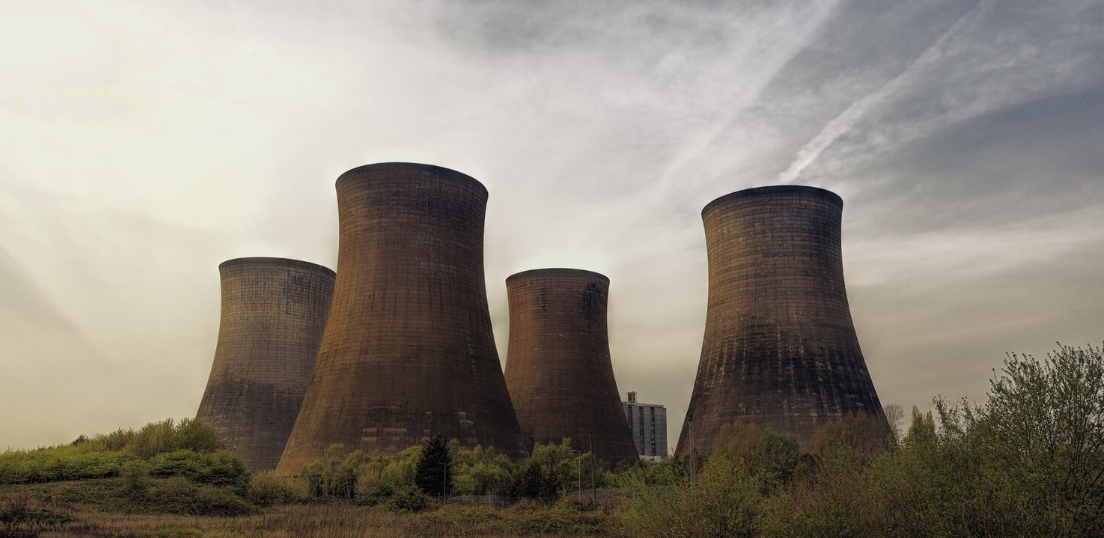
The way it ended has an almost poetic quality. Sitting in a field in Oxfordshire, of all places, a machine that had quietly pushed the boundaries of human science for forty years decided to produce the most remarkable outcome of its life in its final experiment. 69 megajoules. Five seconds. Two milligrams of fuel per point. numbers that, until you sit with them, don’t quite make sense.
In its final deuterium-tritium experiment, the Joint European Torus, or simply JET as it is known in the physics community, broke its own world energy output record by a full ten megajoules, surpassing the record set just two years prior in 2022. Scientists found that for those five seconds, there was enough energy to power about 41,000 homes. Although it’s a peculiar unit of measurement (homes, seconds), it does something that raw joule counts cannot: it gives the scale a sense of realism.
| Category | Details |
|---|---|
| Facility Name | Joint European Torus (JET) |
| Location | Culham Centre for Fusion Energy, Oxfordshire, United Kingdom |
| Type | Tokamak (Magnetically Confined Fusion Reactor) |
| Operated By | UK Atomic Energy Authority (UKAEA) & EUROfusion Consortium |
| First Plasma | 25 June 1983 |
| Officially Opened | 9 April 1984, by Queen Elizabeth II |
| First D-T Experiment | 9 November 1991 |
| Final Record Set | 69 megajoules over 5 seconds (December 2023) |
| Previous Record | 59 megajoules (2022) |
| Scientific Operations Ended | December 2023 |
| Decommissioning Expected | By 2040 |
| Reference Website | UK Atomic Energy Authority — UKAEA |
Situated approximately ten miles south of Oxford, beyond roundabouts and low hedgerows, the Culham Centre for Fusion Energy resembles a mid-century research campus rather than the location of one of the most important scientific instruments ever constructed.
JET’s residence, Torus Hall, was finished in January 1982. Almost immediately after, work on the machine itself started. The following year, in the summer of 1983, it achieved its first plasma; in April 1984, Queen Elizabeth II visited to formally open it. Anything can’t survive for forty years, much less a machine that frequently runs at temperatures ten times hotter than the sun’s center.
Tiny amounts of deuterium and tritium, two hydrogen isotopes, were heated to such high temperatures inside JET’s tokamak and kept in place by strong magnetic fields, spinning like a doughnut. Heat is released when the two isotopes combine.
Fundamentally, what the sun does is the process itself. It has always been difficult to do it in a sustained, controlled manner without the whole thing collapsing, which is what it really wants to do. Plasma is uncooperative. It frequently finds edges, destabilizes, and explodes outward. It is more difficult than most people outside the field realize to get it to behave for five continuous seconds at these power levels in a real deuterium-tritium environment.
The leader of the EUROfusion Tokamak Exploitation Task Force, Dr. Emmanuel Joffrin, made a point that is simple to ignore in the hype surrounding the headline figure. In addition to producing energy, JET showed for the first time in a real D-T environment how to control the intense heat that flows from the plasma toward the exhaust and stabilize the plasma edge to avoid energy bursts that could harm the reactor wall.
These aren’t footnotes. Before commercial fusion becomes more than a pipe dream, these are the exact issues that future machines like ITER, STEP, and DEMO will need to resolve.
It should be noted that the five-second ceiling was not a scientific decision. If the process took longer, JET’s copper wire magnets would just overheat. Superconducting electromagnets will be used in ITER, the replacement being constructed in southern France, to maintain the reaction for much longer than that—possibly more than 300 seconds. That distinction is very important. It’s the distinction between constructing something that genuinely produces power for a grid and proving a principle. JET repeatedly demonstrated the idea until it was no longer required.
Beyond its final record, it’s worth considering what this machine stood for. In 1991, JET beat the American TFTR machine by two years to become the first reactor in the world to run on the actual production fuel mix, which is 50-50 tritium and deuterium. It achieved a fusion energy gain factor of Q=0.67 in 1997, setting a record for the closest approach to scientific breakeven.
For twenty-four years, that record stood. There are hundreds of physicists who have dedicated their careers to feeding data into JET, modifying its parameters, and witnessing it fail in fascinating ways and occasionally succeed in spectacular ones. Its final experiments alone involved more than 300 scientists and engineers from throughout Europe.
Observing all of this from the outside gives the impression that the scientific community is still figuring out what JET’s closure truly means. Concerned about a research gap between JET’s end and ITER’s eventual operation, a group called Scientists for JET started a petition as soon as the closure was announced. It’s not an abstract worry. A document does not constitute expertise.
It resides in those who conduct experiments, make decisions, and keep in mind past events. There is a genuine risk if that institutional knowledge is lost, even momentarily.
In late 2022, the Lawrence Livermore National Laboratory in California used lasers instead of a tokamak to achieve net energy gain, or producing more energy from fusion than was put in. In contrast, JET’s method still needed more energy input than it generated. However, the two approaches are addressing distinct issues, and the comparison serves more as a reminder that there are several viable routes to the same goal than as a competition.
It is genuinely unclear if that destination will be reached by 2050, as some optimistic projections suggest. At the very least, JET proved that the path exists. The laws of physics are applicable. Whether engineering and economics can be forced to follow is the question.
Sometime in December 2023, the final experiment concluded outside Culham’s Torus Hall, and the machine became silent. It is anticipated that decommissioning will take until 2040. In 2021, a record that had stood since 1997 was surpassed. In 2022, that record was surpassed once more. Then JET broke it again in its final act. It’s difficult not to find something subtly amazing in that: a forty-year-old machine dying on its own terms in an Oxfordshire field.