
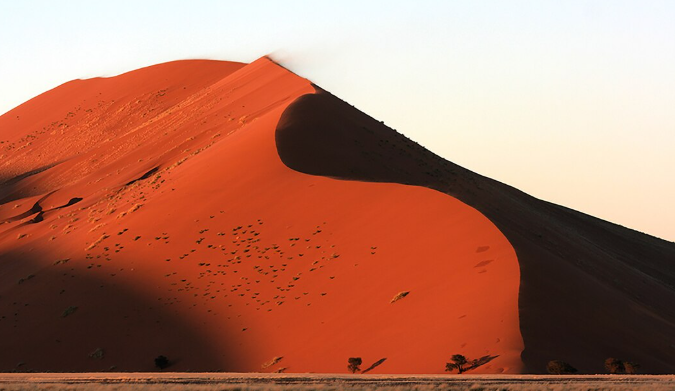
In the early hours of the Crimson Desert, far-off mountains sit beneath a fading orange sky as the wind picks up across a desolate ridge, kicking dust into the air. Nothing blows up. There is no urgent flashing quest marker. It simply… lingers. And for some reason, the game’s quietest moments convey more about it than its loudest battles.
After years of anticipation, Pearl Abyss’s game finally arrives, transforming from an online-focused concept into a vast single-player universe. They had high expectations, perhaps too high. People seemed to want this to be the next great open-world game, one that could coexist peacefully with titans like Red Dead Redemption 2. Instead, what they received seems more intricate.
| Category | Details |
|---|---|
| Game Title | Crimson Desert |
| Developer | Pearl Abyss |
| Release Date | March 19, 2026 |
| Platforms | PC, PlayStation 5, Xbox Series X/S |
| Engine | BlackSpace Engine |
| Genre | Action-adventure, open-world |
| Main Character | Kliff (Greymane faction) |
| Setting | Continent of Pywel |
| Mode | Single-player |
| Reference | https://crimsondesert.pearlabyss.com |
Pywel’s world is vast. In a matter of minutes, that much is evident. The landscape seems almost ready to divert you, with villages extending into forests and cliffs opening into valleys. As you stroll around it, you pick up on little details like smoke rising from far-off camps, animals darting through tall grass, and NPCs fighting next to market stalls. Though not always in a controlled manner, it feels alive. It can be immersive at times. It can be overwhelming at times.
At first look, combat is impressive—it’s weighty, fluid, and almost cinematic. The main character of the game, Kliff, moves with a sort of deliberate force, chaining attacks, swinging weapons, and responding to enemies who don’t always act in predictable ways. However, cracks start to appear after a few hours. It can feel awkward to use controls. Timing is subject to change. The system may require more patience than most players anticipate.
This shows a pattern. In Crimson Desert, almost every strength appears to be accompanied by a weakness. Although the scale is amazing, it is cluttered. Although the goal is clear, execution can occasionally lag behind. As it develops, it seems as though the developers attempted to incorporate every aspect—combat systems, crafting, exploration, and large-scale battles—and ultimately produced something that struggles with prioritization.
It’s difficult to ignore, though. That’s the peculiar aspect.
After ten or twenty hours, things start to make sense. Uncomfortable systems begin to make sense. The world seems more interconnected and less chaotic. The game seems to demand dedication before showcasing its best features. Not everyone will benefit from that strategy. Frustrated, some players will leave early. The promise of something more profound will entice others to stay.
That split is reflected in the reception. Scores are in that ambiguous range; they are neither exceptional nor poor. Critics don’t seem to know how to classify it. Conversely, players—especially those who put in time—seem more willing to overlook its shortcomings. Which viewpoint will define the game’s legacy is still up in the air.
A technical discussion about it is also taking place. Platform-specific performance varies, and some versions’ lack of early footage caused controversy prior to release. Some players were reminded of previous releases that fell short of expectations. In today’s gaming environment, that conflict between hype and delivery feels familiar.
The most notable aspect, however, is how intimate the experience becomes. You are not gently guided by Crimson Desert. Sometimes it pushes awkwardly, and other times it pushes brilliantly. As you watch this happen, you get the impression that the game is more concerned with expressing a particular idea, even if it makes mistakes along the way, than it is with winning over everyone.
That could be the reason it persists. It refuses to be forgotten, not because it is perfect.
In recent years, the industry has seen a lot of polished, formulaic open-world games. That doesn’t really apply to Crimson Desert. It is unexpectedly captivating, but it also feels harsh at times and excessively ambitious at others. It’s possible that players will come to appreciate it more in the future than their initial reactions indicate.
Ultimately, the game leaves you with an impression rather than a definitive conclusion. A big, flawed world. A narrative in progress. And the subtle feeling that, if you’re prepared to stay a little longer, there’s something worth discovering beneath its rough exterior.