
The structure itself appears surprisingly unremarkable. Glass walls reflecting the late afternoon sun, just another biotechnology lab nestled among offices and research facilities in Texas. However, scientists are working covertly to revive the Woolly mammoth, an endeavor that would have seemed like science fiction a generation ago.
Colossal Biosciences, a biotechnology startup that has drawn hundreds of millions of dollars from investors enthralled with the concept of “de-extinction,” is spearheading the project. The company’s co-founders, Harvard geneticist George Church and tech entrepreneur Ben Lamm, think that modern gene editing combined with ancient DNA could recreate an animal that went extinct over 4,000 years ago.
| Category | Details |
|---|---|
| Project | Woolly Mammoth De‑Extinction Project |
| Leading Company | Colossal Biosciences |
| Co-Founders | Ben Lamm and George Church |
| Core Technology | CRISPR gene editing |
| Closest Living Relative | Asian elephant |
| Extinct Species Target | Woolly mammoth |
| Planned Habitat | Arctic tundra ecosystem |
| Proposed Timeline | First hybrid calf possibly by 2027–2028 |
| Scientific Goal | Recreate mammoth traits to restore Arctic grasslands |
| Reference | NPR |
CRISPR gene editing, a molecular tool that enables researchers to precisely cut and alter DNA, is at the heart of the endeavor. The technology is being used by researchers to introduce characteristics of mammoths, such as smaller ears, thick fur, and cold-resistant fat layers, into the genome of the Asian elephant, which is the closest living relative of mammoths.
It’s possible that the last creature won’t actually be a mammoth. Rather, scientists characterize it as a hybrid—an elephant with a variety of genetic modifications that formerly enabled mammoths to endure harsh Arctic winters.
Technicians move between sequencing machines and incubators as they walk around the lab, humming softly in the fluorescent light. DNA sequences are shown on screens that scroll like digital code across monitors. Contrary to what the headlines imply, the atmosphere doesn’t feel as dramatic. However, there is a great deal of ambition behind the work.
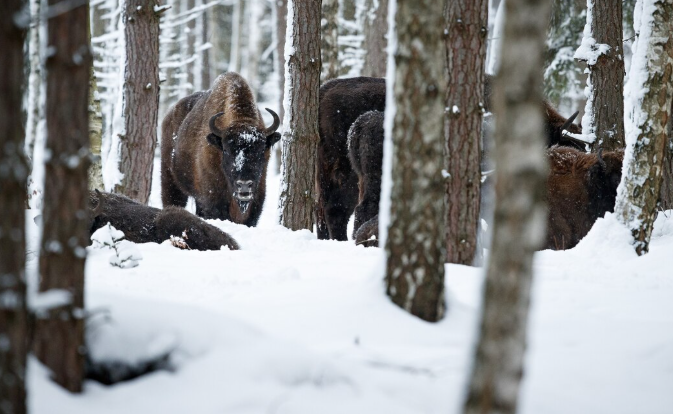
Eventually, Colossal plans to release herds of elephants that resemble mammoths into the Arctic tundra. Large grazing animals may aid in the restoration of a lost ecosystem known as the “mammoth steppe,” according to a theory supported by a number of climate scientists. By trampling snow and clearing shrubs, these animals might allow cold air to reach the ground, helping protect frozen permafrost that stores vast amounts of carbon.
There is a mix of quiet hesitation and excitement in the room as scientists explain the concept. Because the project is at the very edge of what biology can consistently produce.
Although there is only a 0.4 percent genetic difference between elephants and mammoths, it is far more difficult to translate ancient genes into a living animal than it is to edit a few sequences. When mammoth DNA is taken from frozen remains in Siberian permafrost, it is frequently broken up. It takes a combination of computation, careful experimentation, and guesswork to reconstruct those genetic instructions.
Pregnancy is still a challenge, even if the genetic engineering is successful.
Elephants have one of the longest gestation periods in the animal kingdom, carrying their young for almost 22 months. As of right now, edited embryos will be implanted into elephant surrogates. Artificial wombs have been proposed by some researchers, but the technology is still in its infancy.
Whether the first successful birth will occur within the company’s aggressive 2027 or 2028 timeline is still up in the air.
Investors are very interested in the project. The company now has more than $400 million in total backing thanks to a flood of venture capital. The resurrection of extinct animals may be Silicon Valley’s most audacious technological venture to date. However, opinions are much more divided outside of the startup ecosystem.
The project, according to some conservation biologists, runs the risk of making extinction a mistake that can be corrected rather than a permanent warning. Critics contend that if species can be brought back to life, the current need to save endangered animals may gradually wane.
Others prioritize the welfare of animals. Because Asian elephants are already in danger of extinction, using them as surrogates raises moral concerns about unsuccessful pregnancies or genetic issues.
In the midst of that controversy, Colossal’s researchers frequently present their work as a way to mitigate climate change.
Compared to the global average, the Arctic is warming almost four times more quickly. Massive reserves of carbon and methane, two greenhouse gases that could hasten climate change if released, are found in permafrost in Alaska and Siberia. By restoring old grasslands, some scientists think reintroducing large herbivores could help slow that process. It’s an intriguing concept. And a dangerous one.
The world of the Ice Age, where mammoths flourished, has vanished, ecologists quietly observe. Since those animals vanished, Arctic ecosystems have undergone significant change. Unpredictable outcomes could result from the introduction of a new hybrid species.
As the discussion progresses, there’s a sense that the enormous project offers a deeper insight into how humans interact with technology.
For centuries, extinction seemed unchangeable, almost sacred in its finality. Now, labs are starting to challenge that presumption. Artificial reproduction, synthetic biology, and gene editing are expanding the definition of species.
It’s difficult to ignore the project’s peculiar symbolism. A modern laboratory is reconstructing an animal that was frozen in ice for thousands of years, piece by genetic piece.
It’s unclear if the mammoth will ever walk the Arctic again. The journey from altered cells to a living herd may take decades, and biology rarely adheres to strict timelines.
Nevertheless, the first steps are already being taken in a quiet lab filled with glowing computer screens and DNA sequencers. And the Ice Age might be lurking somewhere in those genetic strands.