
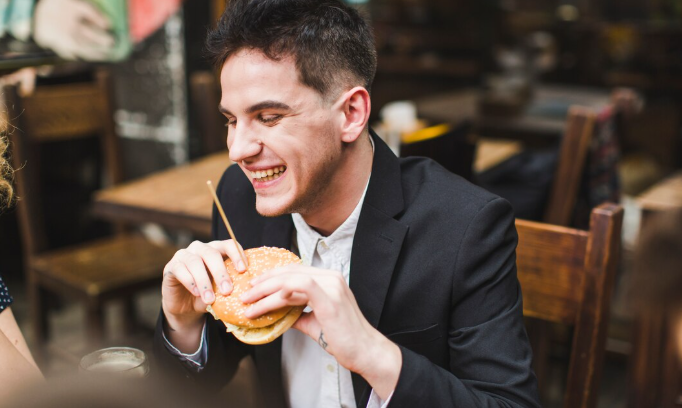
The duration of the video is under two minutes. A tall burger wrapped in recognizable yellow paper rests in front of a man sitting at a small table wearing a clean office shirt. The cameras are rolling. Naturally, the man is McDonald’s CEO Chris Kempczinski, and the sandwich is the Big Arch burger, the company’s most recent invention.
It was supposed to be a standard marketing moment. This kind of behavior is common among executives. Say something positive about the taste, take a confident bite, and smile for the camera. However, as you watch the video, there’s an odd pause. For a moment, Kempczinski looks at the burger as though he’s figuring out its course. Then comes the tiny, cautious, almost courteous bite. And for some reason, the internet chose to focus on that one little moment.
| Category | Details |
|---|---|
| Person | Chris Kempczinski |
| Position | CEO and President |
| Company | McDonald’s Corporation |
| Headquarters | Chicago, Illinois, USA |
| Burger Featured | Big Arch Burger |
| Viral Moment | CEO tasting the burger in promotional video |
| Online Reaction | Memes, jokes, and debate about authenticity |
| CEO Statement | Says he eats McDonald’s food 3–4 times a week |
| Industry | Global Fast Food |
| Reference | https://www.mcdonalds.com |
It’s difficult to overlook the burger itself. Crispy onions peeking through the bun, two thick patties with melted cheese sliding over the edges. According to McDonald’s, the Big Arch is one of their largest burgers to date, loaded with lettuce, pickles, and sauce. It appears more like a product demo while seated at a desk in bright office lighting than a casual lunch.
Although it may seem insignificant, that detail is important. There is a sort of emotional shorthand associated with food, particularly fast food. Even if it’s messy, people want it to feel familiar. A subtle tension is introduced by the orderly and controlled boardroom environment.
In the video, Kempczinski calmly refers to the sandwich as a “product.” Online, that word alone caused some people to take notice. That is not how burgers are typically described, at least not in popular culture. They are hamburgers. Lunch. Comfort food. Referring to it as a product gives the scene a slightly corporate feel, as though it were taken from a quarterly meeting instead of a kitchen counter.
The bite that everyone saw follows. It’s not big. incredibly tiny.
The clip went viral in a matter of hours. Joking comments on Instagram. The moment was broken down frame by frame in Reddit threads. The nibble was likened by some viewers to a cartoon character who is anxiously trying a burger for the first time. Others questioned whether the CEO of the largest fast-food chain in the world truly consumes the food that his business sells, possibly only half-jokingly.
The way the internet responds to situations like these has a peculiar cadence. It’s a promotional video for one minute. It becomes a cultural artifact the next moment. There are memes. Videos of reactions come next. Even brands participate in the discussion. At one point, videos showed executives from competing chains eating their own burgers in incredibly large portions. As you watch it all play out, it seems less like corporate marketing and more like a playground dispute between the major fast-food chains.
Eventually, Kempczinski addressed the chatter with an unexpectedly direct remark. He claimed to eat three or four times a week at McDonald’s. That assertion provoked discussion of its own. It was interpreted by some as evidence that he maintains relationships with his clients. Others made subdued remarks regarding optics and health. In that complex area, fast food has long existed—some people find it comforting, while others find it concerning.
The business might have anticipated a different result from the video. The goal of the Big Arch burger launch was to create excitement, not humor. However, there is a feeling that viral attention—even awkward attention—still has a function. Suddenly, millions of people who had never heard of the Big Arch understood exactly what it was.
When you pass a McDonald’s restaurant on a busy evening, you can understand why the company values these occasions. Families entering the building. Teens gathered around tables. Delivery trucks with insulated bags are waiting. Like food, the company sells familiarity. A new burger needs to blend in with that beat naturally.
Authenticity then becomes problematic. In an effort to seem approachable, contemporary CEOs are increasingly using social media. It works sometimes. It seems a little staged at times. Tiny details, such as body language, tone of voice, or even the size of the first bite, can make all the difference.
It’s difficult to ignore how fleeting those moments are. The story can be changed by a single uncomfortable pause. What started out as a promotional video turns into a discussion about leadership, company image, and whether or not executives actually live in the worlds they oversee.
The episode is likely to eventually fade for McDonald’s. Decades of cultural changes, menu experiments, and public criticism have not affected the chain. That trajectory is unlikely to be altered by a tiny bite of a burger. Nevertheless, there is an intriguing lesson concealed in plain sight when viewing the clip today.
Every gesture is magnified in the social media age. Each word is repeated. Occasionally, the internet surprisingly determines that the way someone bites into a billion-dollar product is more fascinating than the burger itself.