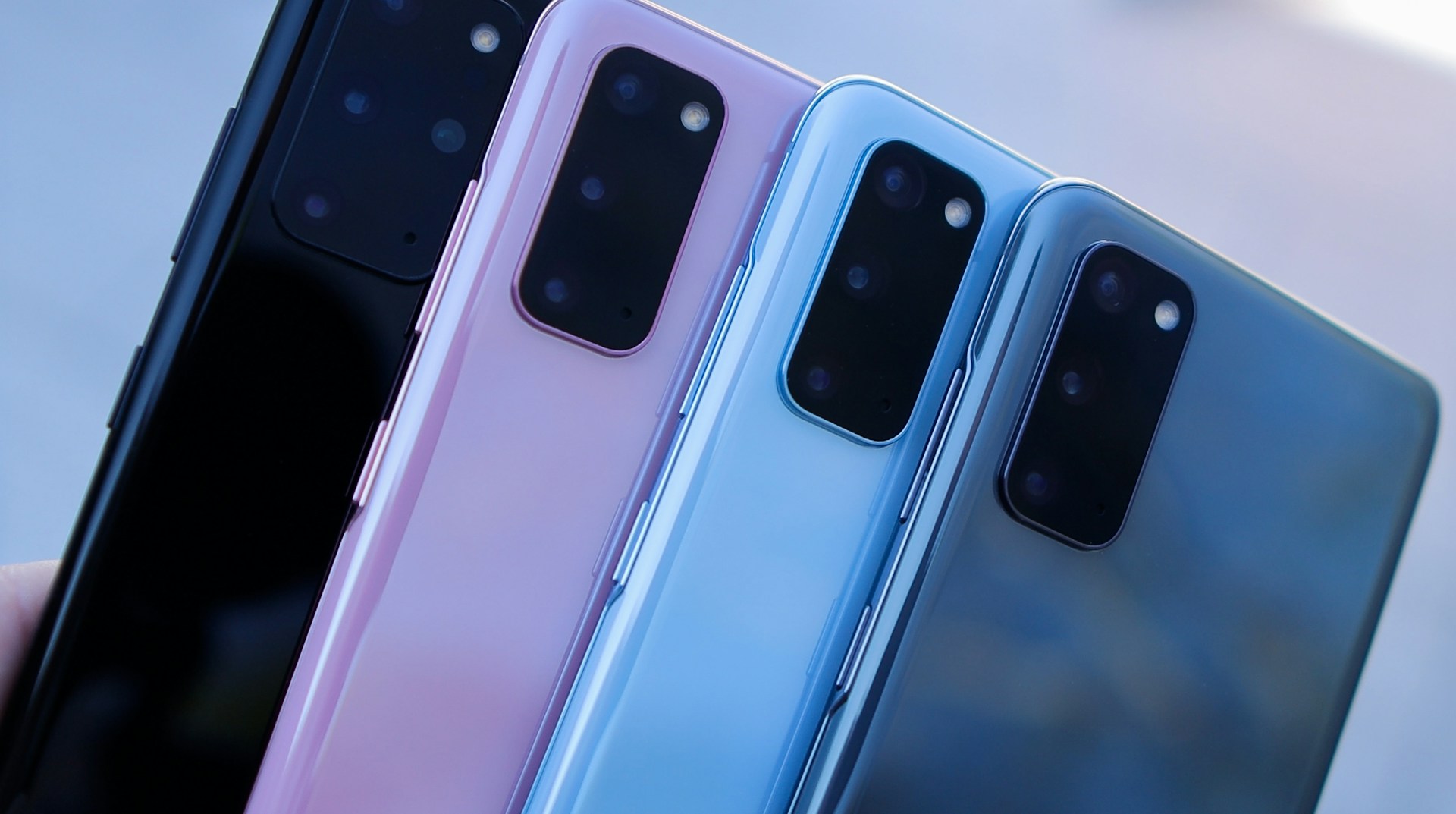
Samsung has reportedly canceled plans to introduce a new camera module for the upcoming Galaxy S26, a decision driven largely by cost constraints and aggressive pricing strategies from its primary rival. According to industry insiders cited by the South Korean trade publication The Elec, the tech giant will instead reuse the camera hardware found in the current Galaxy S25 model.
Originally, the roadmap for the Galaxy S26 involved a significant upgrade to the base model’s photography capabilities, a move that would have coincided with a price increase. However, market dynamics shifted when Apple managed to keep the pricing for the iPhone 17 stable, with the base model retailing for around 950 Euros in Germany. Faced with this competitive ceiling, Samsung concluded that raising the price of the S26 was no longer a viable option, forcing them to scrap the more expensive camera components.
Consequently, the Galaxy S26 is expected to launch with a familiar optical configuration: a 50-megapixel main sensor, a 12-megapixel ultra-wide lens, and a 10-megapixel telephoto unit. Supply chain sources indicate that the image sensors will likely be identical to those used in the Galaxy S25, signaling a generation of stagnation for the standard model’s hardware.
Production Delays and the “Edge” Experiment Failure
The abrupt change in camera specifications has had a knock-on effect on the manufacturing timeline. While the premium Ultra model is scheduled to enter production this month as planned, mass production for the standard Galaxy S26 and the S26 Plus has reportedly been pushed back to early next year. This delay is attributed to necessary component adjustments; the parts designed for the canceled camera module are incompatible with the older hardware, requiring a retooling of the internal layout.
Further complicating the lineup is the resurrection of the “Plus” model, which appears to be a direct response to a failed experiment. Samsung had previously replaced the Plus variant with a thinner “Galaxy S25 Edge,” betting heavily that consumers wanted slimmer devices. That gamble did not pay off. Both the Galaxy S25 Edge and the competing iPhone Air reportedly suffered from poor sales figures. Despite Samsung’s initial confidence during the launch—where they assured the press that the market was clamoring for thin smartphones—consumer demand simply did not materialize. As a result, the company is pivoting back to its traditional form factors.
A Look Back: The Budget Foundations of the Galaxy A Series
To understand Samsung’s current positioning, it is often helpful to look at the historical evolution of their mass-market devices, such as the Galaxy A10s. Released in August 2019, this device represents the company’s long-standing strategy of saturating the entry-level market with reliable, if modest, specifications.
At the time of its launch, the Galaxy A10s featured a 6.2-inch IPS LCD panel with a resolution of 1520×720 pixels. With an 80.75% screen-to-body ratio and a pixel density of 271 PPI, it offered a decent viewing experience for the budget segment. The design was utilitarian, constructed with a plastic back and frame, measuring 7.8 mm in thickness and weighing 168 grams. It was available in a variety of standard colors, including Black, Green, Blue, and Red, and retained physical interfaces that have since become rare, such as the 3.5mm headphone jack.
Performance and Internals of the 2019 Era
Under the hood, the A10s was powered by a MediaTek Helio P22 chipset (MT6762), built on a 12 nm process. The octa-core ARM Cortex-A53 processor was clocked at 2000 MHz and paired with an IMG PowerVR GE8320 GPU. By modern standards, the memory configuration was tight, offering just 2GB of RAM and 32GB of internal storage, though this could be expanded via microSDXC up to 512 GB. The device initially shipped with Android 9.0 Pie but eventually saw updates through to Android 11.
One of the phone’s strongest selling points was its 4000 mAh Li-Polymer battery, which provided substantial longevity given the low-power processor. Charging and data transfer were handled via a microUSB 2.0 port, a standard that was still prevalent in the budget sector before the universal shift to USB-C. Connectivity options were robust for the time, including Bluetooth 5.0, Wi-Fi 802.11 b/g/n, and LTE Cat 4 speeds, alongside support for dual Nano SIMs.
Legacy Camera and Biometrics
In terms of photography, the A10s utilized a dual-camera setup on the rear, a feature that was just beginning to trickle down to entry-level phones. The main shooter was a 13 MP sensor with an f/1.8 aperture and autofocus, accompanied by a 2 MP depth sensor for portrait effects. It supported 1080p video recording at 30 fps and included an LED flash. The front-facing camera was an 8 MP unit capable of matching the rear’s video capture resolution.
Biometric security was also a key focus, with the inclusion of a rear-mounted fingerprint scanner and 2D face unlock, offering users multiple ways to secure their device. While the technology worlds apart from the upcoming Galaxy S26, devices like the A10s laid the groundwork for Samsung’s dominance in the global smartphone market, balancing cost and functionality to reach millions of users.