
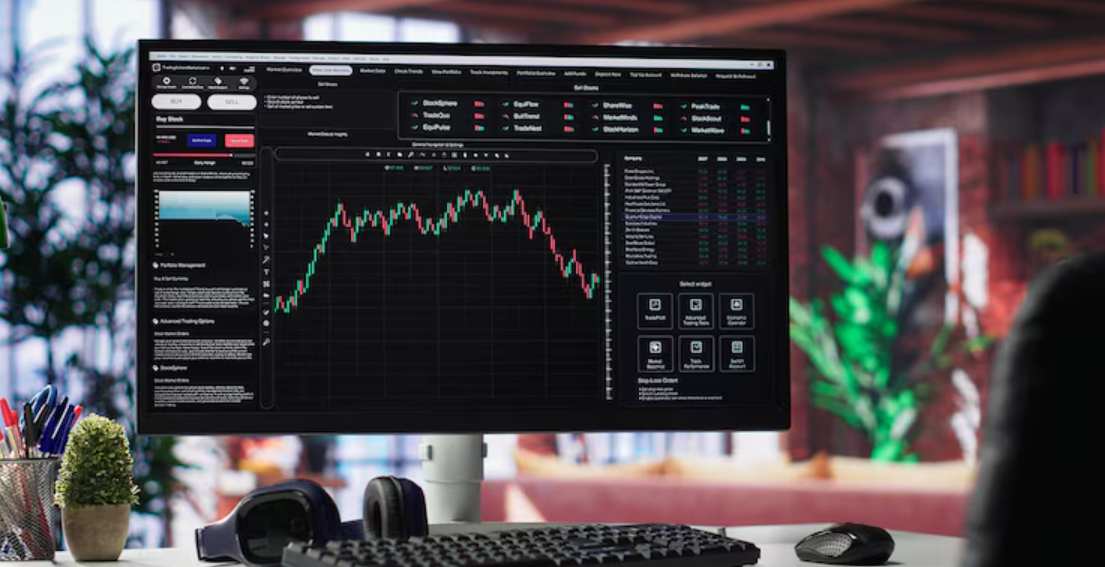
A certain type of trader leans in more when they notice a market correction. They would tell you that it wasn’t necessarily due to carelessness. However, a few U.S. wealth management companies quietly sat on some of the most aggressive leveraged bets in the market as the Nasdaq fell past the 10% correction threshold in late March 2026 and some investors scrambled to get out. TQQQ, ProShares’ triple-leveraged Nasdaq-100 ETF, is the fund at the heart of it all.
Examining the numbers reveals a compelling story. At year’s end in 2025, Wealth Enhancement Advisory Services owned 135,309 shares of TQQQ, valued at approximately $7.44 million, almost doubling its position in just the fourth quarter. 42,668 shares worth about $2.25 million were disclosed by Sherman Wealth Management. Meanwhile, Woodward Diversified Capital was increasing its ownership of the double-leveraged sibling fund QLD.
| Information Category | Details |
|---|---|
| Full Name | ProShares UltraPro QQQ |
| Ticker Symbol | TQQQ |
| Fund Type | Leveraged Exchange-Traded Fund (ETF) |
| Leverage Target | 3x daily performance of the Nasdaq-100 Index |
| Issuer | ProShares |
| Founded | 2010 |
| Benchmark Index | Nasdaq-100 (NDX) |
| Expense Ratio | 0.88% |
| Exchange | NASDAQ |
| Primary Risk | Daily reset mechanism — long-term returns can deviate sharply |
| Regulatory Body | U.S. Securities and Exchange Commission (SEC) |
| Reference Website | ProShares Official Site |
These aren’t midnight retail speculators entering ticker symbols into a brokerage app. These are registered advisory firms that handle client funds, submit quarterly reports to the SEC, and seem to remain convinced that the Nasdaq’s long-term narrative outweighs the short-term volatility.
It’s important to consider what TQQQ really does. The fund aims for three times the Nasdaq-100’s daily return. That’s amazing on a good day. TQQQ is expected to deliver something near 6% when the index rises by 2%. However, ProShares’ own documentation is remarkably direct: hold this fund for more than one trading day, and the compounding of daily resets can cause returns to veer away from the underlying index.
Even if the Nasdaq closes the year essentially flat, a long-term TQQQ holder may lose money in a volatile, sideways market. That risk isn’t hypothetical. Under the correct circumstances, it is a mathematical certainty.
However, interest continues to rise. While the SEC temporarily halted reviews of some funds offering leverage above 2x, citing a need to more thoroughly evaluate the risks, Direxion, GraniteShares, and others are actively creating new leveraged products. In short, interest in trading volatility has simply increased, according to Mo Sparks of Direxion.
Bryan Armour, a Morningstar analyst, framed it differently, referring to it as a “growing reliance on speculation.” There is no conflict between those two descriptions. It’s possible that they are saying the same thing.
Tech valuations have significantly decreased. By late March, the sector’s forward price-to-earnings ratio had fallen from 32 at the end of October 2025 to about 20. Chris Galipeau of Franklin Templeton interprets that as a sign that risk-reward is getting better. He might be correct. The Nasdaq has previously been written off and returned with vigor.
However, purchasing a triple-leveraged instrument that amplifies every daily swing, even the negative ones, is different from purchasing a beaten-down tech index. In the context of long-term index investing, Galipeau’s optimism regarding valuations makes sense. The question of whether it warrants a three-fold leveraged position is completely different.
In the meantime, Bitget has listed its inverse counterpart, SQQQ, and TQQQ as stock contracts that allow for up to 20x leverage. This implies that a trader can now increase their exposure twentyfold by taking a position on a product that is already three times leveraged.
It’s difficult to ignore the accumulation of layers. Eventually, the instrument becomes less about the Nasdaq-100 and more like a pure volatility wager that is virtually unrelated to the underlying companies.
There are blind spots created by the timing of these disclosures. With a 45-day delay, SEC Form 13F records holdings as of December 31. It’s still unclear what advisers did in January, February, or March after the correction became more severe. The filings for the first quarter won’t be available until the middle of May.
As markets turned, there’s a good chance that some of these positions were drastically reduced. Additionally, some might have been added to. As of right now, no one outside those companies is aware.
As of the last day of 2025, a significant number of professional advisers had significant leveraged exposure to the Nasdaq-100, according to the data that is currently available. Tactical audacity, faith in technology’s comeback, or simply the long-lasting allure of triple-digit gains on good days—probably a mix of all three.
Edward Jones’ Angelo Kourkafas succinctly summed up the state of the market: everything is suffering, including technology. For megacap technology, Raymond James’ Matt Orton described it as a perfect storm. Instead of looking shocked, both analysts appeared resigned.
In the current climate, TQQQ has evolved into a kind of Rorschach test for investors’ perceptions of risk. Some people view it as a high-octane tool that should be used carefully, sparingly, and with well-defined exit strategies. For others, it’s a wager that technology will always bounce back, that the Nasdaq’s long arc will bend upward, and that any volatility along the way will be worth three times that upward arc.
It’s still unclear if this early 2026 event will validate those proponents or provide one of the harsh lessons that leveraged ETFs are notorious for. A portion of the story will be revealed in the upcoming quarterly filing. The rest will be revealed by the markets.